

How Do Design Decisions Transform into Urban Experiences that Activate the Humanization of the City?
Cities grow as living networks that reflect the cognitive awareness of their inhabitants; every urban transformation is the outcome of a preceding intellectual shift. When the primary purpose of construction was shelter, the built environment was closer to natural systems—simple in massing and clear in function. However, with the dominance of development models driven by economic efficiency, a technical perspective began to overshadow the concept of the city, distancing it from its social and human core. This marked the emergence of a gap between carefully planned urban products and the requirements of social sustainability, which depend on interaction and harmony to restore the functional role of place. Public spaces expanded in size, yet community interaction within them declined; operational efficiency increased, but the quality of the urban experience weakened. From this methodological gap arose the need to reframe the city as a living fabric built on a human scale, restoring social relationships as a central planning objective.
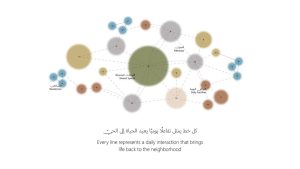
Local Specificity: Identity as a Catalyst for the Quality of the Urban Landscape
The vitality of cities is measured by their capacity to embrace the diversity of their inhabitants. Every society contains a multiplicity of behaviors, customs, and interests, and a conscious city translates this diversity into a fabric of shared relationships and collective experiences. When public space is designed with flexibility that allows this diversity to be expressed without isolation, it transforms into a dynamic environment that reflects the spirit of the community and enables people to recognize themselves through its multiple lenses.
This concept is clearly evident in the Saudi urban landscape, which embodies rare social and cultural richness. Riyadh restores balance between authenticity and modernity; Jeddah expresses its historical openness as a crossroads of cultures; Abha emerges as a model of integration between people and nature through the fusion of mountain architecture and folk art. Meanwhile, Eastern Province cities reflect social openness through their coastal spaces, and AlUla, with its deep historical layers, presents an example of a city that connects its present to its roots, transforming memory into a contemporary urban experience.
Viewed through an urban lens, this diversity does not represent variation in form but rather richness in meaning. Each region contributes its own dimension to the broader urban landscape. Planning is thus redefined as a means of empowering diversity rather than erasing it. The humanization of cities does not aim to unify appearances, but to highlight the uniqueness of each community within the unity of the nation—transforming difference from formal variation into integrated harmony that shapes the contemporary Saudi city.
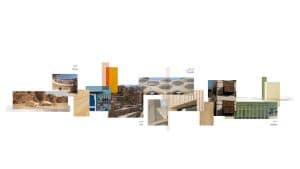
Flexible Urban Performance: The Role of Mixed-Use Integration in Activating Public Space
The concept of mixed-use development did not originate in the modern era; its roots extend back to the early stages of urban transformation in the nineteenth century, when cities sought to merge economic activity and social life within a single fabric. However, the dominance of functionalist models led to the fragmentation of this relationship, turning urban form into isolated units that lost their natural interaction. Over time, it became evident that cities managed through segregated functions lose their social vitality, while those with integrated roles remain more flexible and sustainable.
Today, this vision is being revived as an urban approach that restores human balance to planning. Multi-use spaces serve as mechanisms for reviving the social role of place and strengthening connections between people and their surroundings. They create flexible environments that encourage participation and foster a sense of belonging, transforming public space into a platform for interaction and collective growth. Their value lies not merely in functional diversity, but in redefining proximity within the city—a closeness measured not by distance, but by the social value and meaning it generates. Urban environments do not thrive through expansion alone, but through the life of their inhabitants; when spaces are designed to accommodate human presence, cities gain the ability to express themselves as essential frameworks for community life.
The Impact of Green Spaces: The Relationship Between Mental Health and the Urban Fabric
In Arab-Islamic consciousness, gardens were not merely green spaces, but an urban philosophy expressing human–environmental balance. Since the Andalusian era, when the gardens of Alhambra and Generalife flourished, the concept of place that combines beauty, tranquility, water, shade, architecture, and spirit was firmly established. Nature was shaped as an extension of the human psyche rather than an ornament, and gardens became mirrors of harmony between sky and earth, between what is seen and what is felt.
When this philosophy faded from Western cities during the Industrial Revolution, and urban environments suffocated under smoke and noise, planners realized that cities that exclude nature also exclude people. Public parks were introduced in search of a balance that Islamic cities had achieved centuries earlier. In contemporary Saudi experience, this awareness is renewed with a modern spirit: greenery is no longer merely a visual component, but an integral element of urban life. Green spaces refresh daily rhythms, shaded pathways restore physical and mental clarity, and natural landscapes become tools for interaction that strengthen users’ connection to place. Thus, greenery re-emerges as an ancient Arabic language retold in a modern dialect—reminding us that cities that breathe with nature are those that preserve their humanity.
Green Cities: A Planning Methodology for Responding to Climate Challenges
Within this context, national efforts to embed environmental awareness into Saudi urban planning have become evident. The relationship between environment and urbanism is no longer decorative, but a strategic axis for improving quality of life. Among the most prominent initiatives is the “Green Cities” initiative, launched in 2021 as part of Saudi Vision 2030, serving as a systematic response to climate change and its direct impact on urban usage patterns. Rising temperatures and declining vegetation cover had reduced public space use and weakened opportunities for social interaction.
The initiative aims to reintegrate nature into the urban fabric by increasing vegetation coverage and activating open spaces as functional elements of urban design. This contributes to improved microclimates and provides comfortable environments for daily activities. Through shading strategies, airflow organization, and the use of native plants, design models become more attuned to local conditions and rhythms of life. The Green Cities initiative thus represents a tangible example of urban thought evolving toward human-centered planning, affirming that methodological efficiency is key to sustainable urban balance.
Strategies for Reducing Urban Isolation: The Role of Residential Design in Social Empowerment
The success of residential planning models is measured by their ability to create environments that encourage spontaneous social interaction while respecting privacy. Housing is not merely architectural units for shelter, but an urban system that organizes interaction between individuals, public spaces, and supporting services. As isolated design patterns have dominated modern cities, opportunities for encounter have diminished and senses of belonging have faded, producing generations raised in environments lacking communal memory.
Participatory planning strategies redefine neighborhoods as balanced micro-communities where daily movement intersects with shared spaces that stimulate interaction. Elements such as connective pathways, activity plazas, and distributed service points restore the neighborhood’s social function and enrich its urban experience. When services are distributed according to proximity and accessibility principles, neighborhoods become more connected and less dependent on vehicular movement. Successful residential design is not measured by luxury or scale, but by its ability to leave space within its fabric for dialogue to pass through.
Smart Planning Systems: Aligning Operational Efficiency with Social Purpose
In conscious urban thought, digital technology serves as a means of preserving and enhancing social connections. The humanization of cities is not separate from rapid digital transformation, but integrates it within smart planning systems that balance operational efficiency with community vitality. This requires anticipating future changes and embedding digital infrastructure from the earliest design stages.
When technology is integrated with this vision, it transforms from a purely operational tool into a catalyst that organizes interaction and enables more adaptable spaces aligned with life’s rhythms. Human-centered design analysis not only addresses present conditions, but anticipates future shifts and embeds solutions within planning models to ensure continuity of social ties regardless of changing tools. Cities designed with this awareness allow technology to become an extension of human-centered methodology, where social purpose precedes technological activation.
Multi-Stage Environmental Design: Balancing Physical and Psychological Needs Across the Life Cycle
In contemporary urban thought, age is viewed as a sociodemographic variable within the rhythms of city life rather than an isolated category. Cities that accommodate different life stages and provide open social spaces for movement and living establish sustainable human balance. When children’s play intersects with elderly activities in shared plazas, and urban furniture is designed to encourage interaction rather than separation, space becomes a multi-stage environment that redefines community within planning models.
The real challenge lies not in providing single-function facilities for each group, but in designing multi-purpose spaces that bring them together without compromising experiential quality. Places where older adults find functional comfort and children find curiosity, allowing them to share the city’s rhythm from complementary perspectives. Urban design thus becomes a bridge between life stages, translating life-cycle dynamics into details that balance mobility comfort and psychological stimulation. Cities built with this awareness can accommodate social time within their fabric, strengthening belonging and ensuring inclusive presence.
Shared Memory: The Role of Cultural Systems in Establishing Community Bonds
In conscious urban thought, culture is inseparable from society. Cultural expression forms part of social infrastructure, reflecting a place’s awareness of itself and its people. When key cultural facilities—such as theaters, libraries, museums, and galleries—are integrated into urban fabric, they shift from isolated institutions into platforms for social interaction that embody collective values and aspirations.
Saudi cities offer leading examples of this awareness, notably the King Abdulaziz Historical Center in Riyadh, where architecture and culture merge to redefine the relationship between knowledge and place. Similarly, the Red Sea Museum in Jeddah exemplifies the restoration of urban memory and its connection to cultural dialogue. Both projects demonstrate how culture can function as an active agent in shaping contemporary urban identity.
These active spaces enhance communication across social groups and create a shared language that highlights common ground. They express not only aesthetic taste, but also societal awareness and the urban environment’s capacity to accommodate difference. More broadly, such systems serve as gateways for visitors to understand a city’s identity and civilizational trajectory; visitors read a place through its cultural movement and institutions that encapsulate its memory.
When this dimension is neglected, a city’s authenticity weakens in collective memory. When culture is consciously integrated into planning models, it ensures continuity of temporal dialogue and enduring meaning.
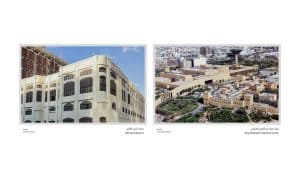
Urban humanization is thus an indispensable planning methodology for achieving urban sustainability and maximizing social return on investment. This vision is evident in the Saudi experience as a strategic framework that prioritizes social relationships as a core development objective. Urban development is not measured by quantitative project metrics, but by its effectiveness in building cohesive systems that embody identity diversity and accommodate future needs. Ultimately, planning revolves around a fundamental equation: cities are not architectural masses, but networks of social interaction. When participatory models succeed in preserving this network, they secure the sustainability of future urban vitality.