

To what extent do real-world challenges reshape professional methodology?
These experiences reflect a professional reality in which Beeah Office—planners, architects, and engineers—engaged with a range of diverse challenges shaped by environmental conditions, regulatory frameworks, site characteristics, and operational requirements across different phases of practice. These challenges did not merely accompany the work; they shaped its trajectory and contributed to the continuous evolution of methodology with each new experience.
Sustainability Between Concept and Practice
In recent years, sustainability has moved to the forefront of architectural discourse, accompanied by broad visions concerning the future of cities and the quality of urban life. However, practice has revealed a clear gap between this theoretical prominence and the patterns of urban development produced on the ground. In many urban environments, sustainability has circulated as a general concept, while city formation has continued to reinforce car dependency, weaken public spaces, and limit the presence of everyday pedestrian life within the urban fabric.
This contradiction demonstrated that sustainability is not achieved through isolated technical additions or performance metrics applied independently of context. Rather, it emerges through reconsidering the relationship between buildings and streets, patterns of movement, and the integration of uses. This shift has led to an understanding of sustainability as an urban process that restores priority to pedestrians, reduces vehicular dominance, and reactivates public space as a key contributor to the city’s operational stability and daily performance.
Climatic Adaptation and the Reinterpretation of Design Solutions
Climate responsiveness represents one of the most persistent challenges in architectural practice, particularly when adopting design models originating from different climatic regions. In hot environments, the challenge extends beyond achieving thermal comfort to rethinking massing strategies, façade treatments, and spatial organization in ways that align with patterns of use and operational demands.
This reality has led professional methodology beyond standardized solutions toward a context-based reading of climate as an active design determinant. As a result, design approaches have evolved to reflect environmental specificity while balancing functional performance and energy efficiency within a practical and implementable framework.
Adapting Traditional Spatial Logic to Contemporary Functional Requirements
Historic cities are often defined by dense urban fabric, diverse patterns of use, and continuous human activity that varies across time and seasons. Within such environments, institutional projects require heightened sensitivity, as buildings become integral components of an active urban system where architectural memory intersects with contemporary operational needs.
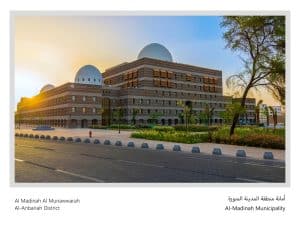
In response, professional methodology has sought to understand and reinterpret the spatial logic of traditional architecture, translating it into contemporary frameworks that address environmental and functional considerations. This approach is reflected in a series of institutional projects, including the Madinah Municipality project, where architectural organization emerged through the integration of contextual spatial logic with modern operational requirements. This alignment enhanced performance efficiency by transforming traditional spatial principles into organizational tools that support long-term urban and operational stability.
Interpreting Traditional Architectural Language in Contemporary Construction
The incorporation of traditional architectural language into contemporary institutional projects presents challenges that extend beyond visual expression. Traditional architecture emerged from specific material, technical, and environmental conditions shaped through historical accumulation.
This raises critical questions regarding the limits of replication and the potential for meaningful reinterpretation. Literal replication risks producing formal gestures detached from their spatial logic or incompatible with modern technical requirements. Consequently, professional methodology has approached traditional architecture as an integrated spatial system, reinterpreted through its relationships, massing logic, and architectural expression, while accommodating contemporary environmental and operational demands.
Documentation and Rehabilitation of Heritage Sites
Heritage sites present challenges distinct from other architectural projects, as interventions must respond not only to structural conditions but also to historical continuity, patterns of use, and cultural significance within the urban fabric.
Within this context, documentation becomes more than a technical procedure; it serves as an analytical tool that reveals spatial logic, transformation patterns, and the limits of restoration and reinterpretation. This approach seeks neither to freeze sites at a single historical moment nor to reproduce them in isolation from contemporary life, but to reintegrate them into present-day urban conditions while preserving their essential characteristics.
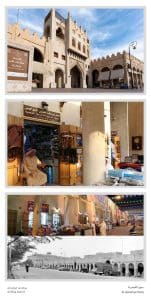
This challenge was evident in the rehabilitation of Souq Al-Qaisariyah in Al-Hofuf following a major fire. The objective was not the literal reconstruction of lost forms, but the recovery of the market’s spatial structure, defined by shop rows, covered passages, and commercial circulation. The intervention preserved local materials and architectural elements, restoring the market as an active urban space capable of sustaining its historical and social role.
Governance of Professional Practice Within Complex Regulatory Frameworks
As institutional projects have grown in scale and complexity, new challenges have emerged beyond architectural design itself, particularly in navigating regulatory frameworks involving multiple authorities and interpretive requirements.
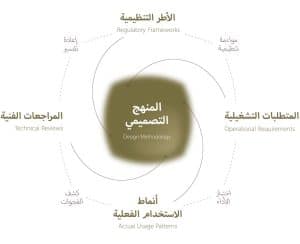
Within this environment, the role of Beeah Office has extended beyond design authorship to include managing the relationship between architectural intent and regulatory processes. This involves maintaining conceptual clarity, guiding project development through review stages, and ensuring that design integrity is preserved within a multi-layered regulatory context.
Professional methodology has consequently evolved to incorporate regulatory literacy, stakeholder alignment, and the preservation of architectural coherence as essential components of practice. Project quality thus emerges not only from design excellence but from the ability to guide and sustain architectural intent throughout complex institutional processes.
These milestones reflect the maturity of a professional practice shaped by planners, architects, and engineers over five decades. This trajectory has been defined by the development of design solutions and the adaptation of professional tools in response to evolving contextual challenges, a progression reflected in the presence of projects within international evaluation platforms and awards.