

When does an iconic structure evolve into an enduring urban reference, and when does it become alien to its context?
Throughout history, icons have embodied collective power, intellectual systems, or spiritual values—manifested in clear architectural forms, as seen in enduring examples such as Burj Khalifa in Dubai and the Clock Tower in Makkah.
In the contemporary landscape, the perspective shifts. When iconicity becomes a design objective in itself, a more direct question emerges: when does presence become an extension of the city’s spirit, and when does a project truly distinguish itself within its urban fabric?
The Icon Between Presence and Role
An architectural icon derives its essence from its relationship with context and the depth of its impact on the urban fabric. A building asserts itself first through a dominant visual presence, granting it distinction as a landmark within the cityscape.
Yet the true value of an icon does not lie in visual impact alone. It unfolds over time through the role it plays—its ability to shape movement, organize surrounding spaces, and influence everyday urban experience. At this point, the building transforms from a static object into an active component of place-making.
But is this integration alone enough for it to endure as an icon? Or does time impose further tests that distinguish what is authentic from what is merely fleeting?
The following framework illustrates the transformation of a building from visual spectacle into a lasting urban reference.

Criteria for Urban Reference
An icon becomes an urban reference when it meets a set of conditions that ensure its coherence with the surrounding environment. This is reflected in the clarity of its design intent, its ability to integrate within the existing fabric, and its contribution to the continuity of the urban form.
It is also evident in how the building establishes a balanced relationship with its context—through scale, function, and its connection to public space. When these criteria are fulfilled, a lasting architectural identity emerges.
Through these parameters, it becomes possible to distinguish between what evolves into a true urban reference and what remains within the limits of mere visual distinction.
So, can an icon truly stimulate a city’s economy and reshape its image?
The Icon as a Catalyst for Urban Growth
The value of an icon becomes most evident when it transcends symbolism to act as a catalyst within a broader urban system.
The Guggenheim Museum in Bilbao stands as a defining example of how an architectural project can become a nucleus for urban revitalization. Developed within a broader strategy to restructure the city’s economy and urban landscape, the project played a central role in enhancing cultural appeal, attracting tourism, and stimulating economic activity.
This case demonstrates that the true significance of an icon lies in its ability to generate sustained urban value—extending beyond its physical boundaries and aligning with the city’s social and operational systems.
The Icon Within a Multi-Landmark Urban Field
When introducing an iconic building into a city already rich with landmarks, the focus shifts toward its position within the broader visual field and its role in maintaining urban balance.
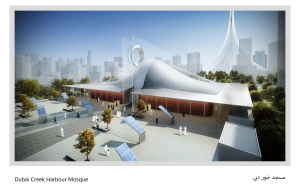
In sites overlooking waterfronts and adjacent to prominent vertical landmarks, spatial reading becomes paramount. Decisions are driven by an understanding of sightlines, scale hierarchy, and visual density within the context.
In such cases, horizontal composition may be adopted to preserve the continuity of the skyline and maintain visual balance. Here, presence is not imposed, but carefully derived from context, as exemplified in the Dubai Creek Mosque project.
Indicators of Urban Alienation
Urban alienation emerges when a building fails to establish a meaningful relationship with its surroundings, remaining detached from patterns of everyday use despite its visual prominence.
This disconnection is reflected in weak pedestrian integration, lack of surrounding activity, and reduced duration of engagement within its vicinity. It also appears in the absence of gathering points or spatial interactions that the project was expected to generate.
At this stage, the building becomes a visual addition rather than an active contributor to the urban fabric, failing to integrate into the rhythm of the city.
Conclusion
The true value of iconic buildings lies in the alignment of distinctive design with precise placement and meaningful urban impact. A project transcends being a mere visual object when it becomes a lived and integrated part of the city.
At the intersection of strong presence and effective role, architecture evolves from a static form into a lasting urban reference—one that shapes the identity of the place and secures its position within the city’s memory.